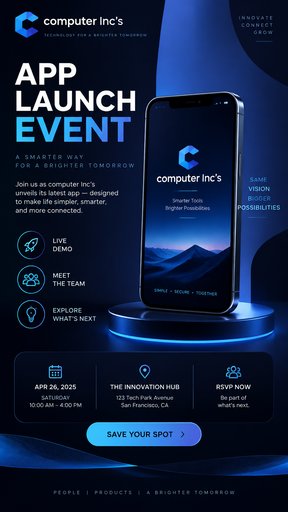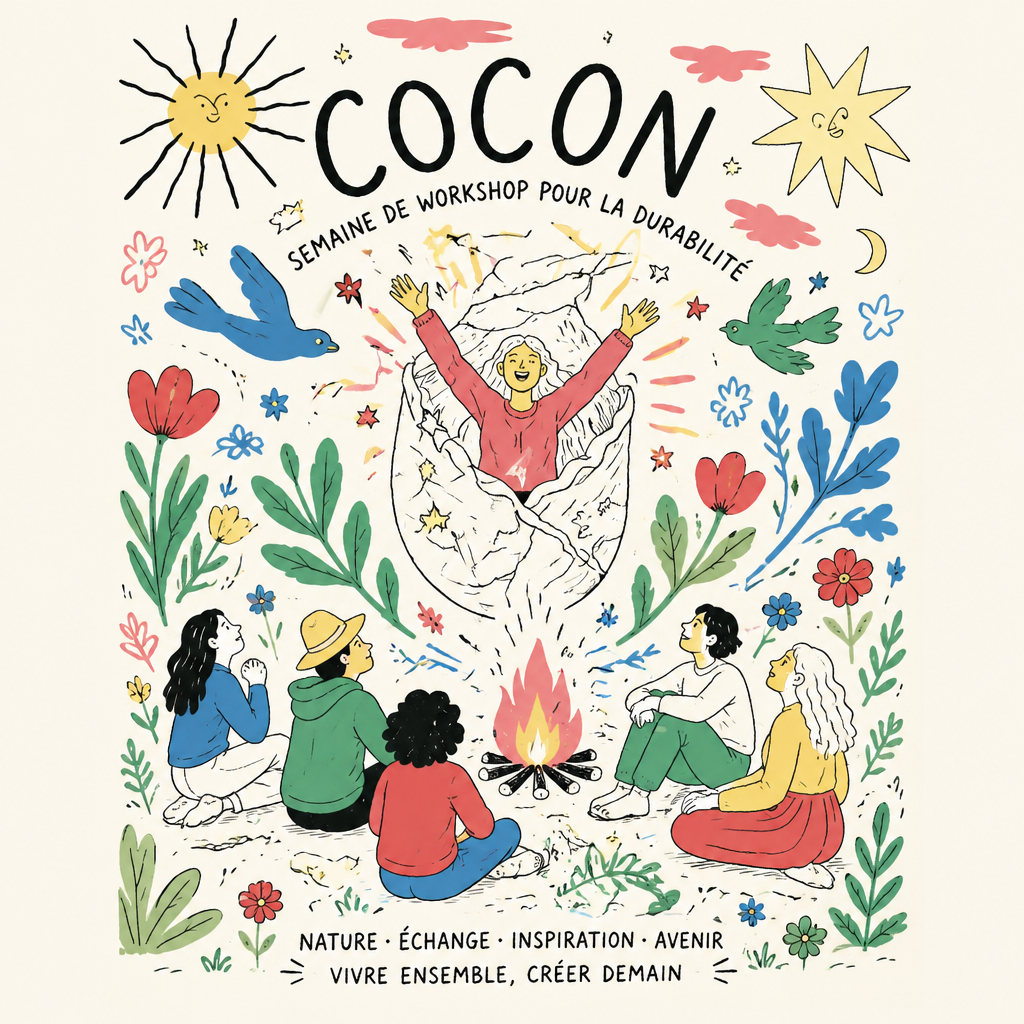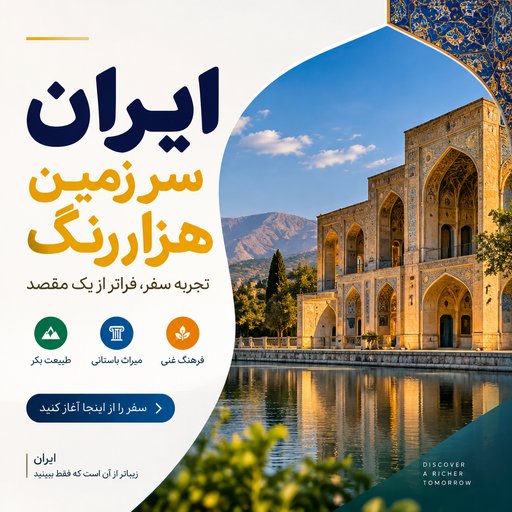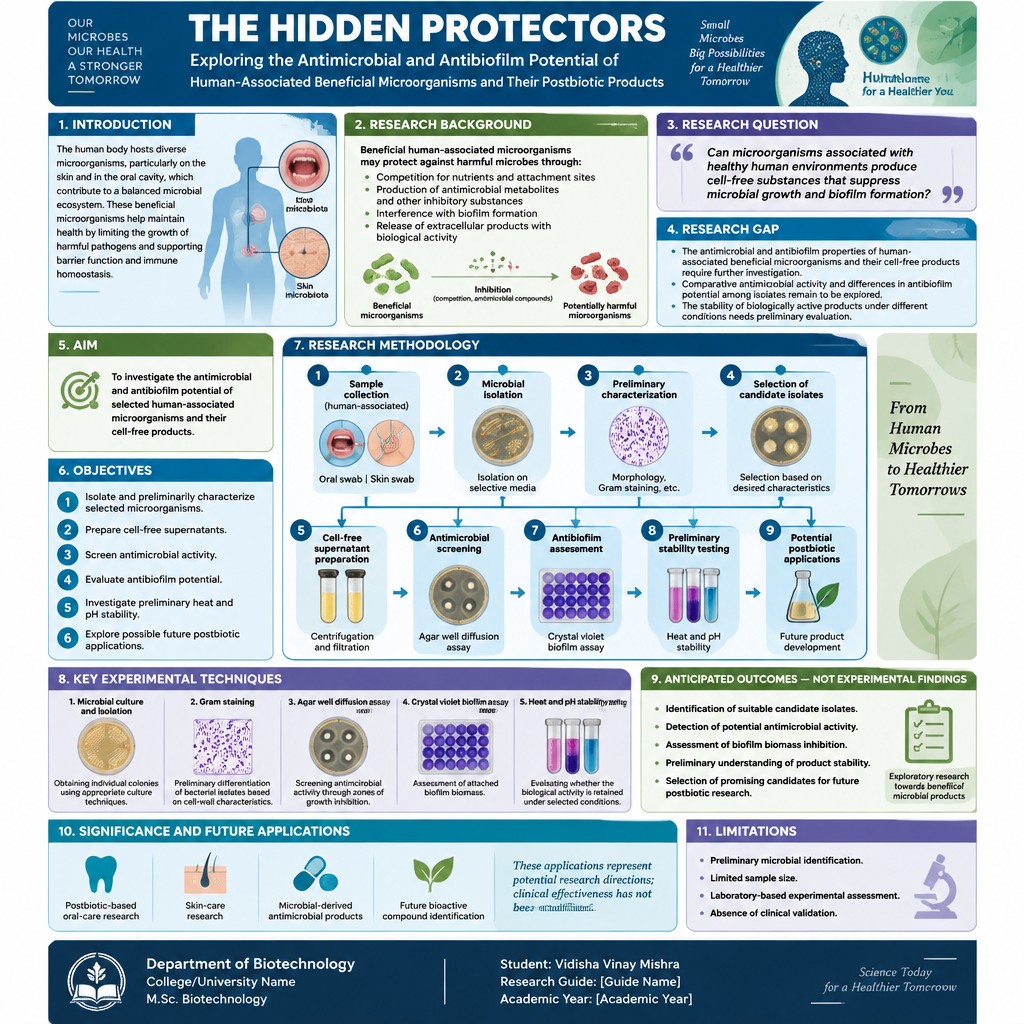
AI-generated design
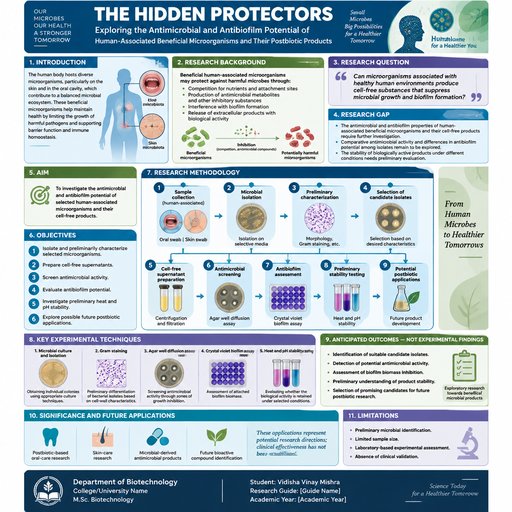
# PROFESSIONAL SCIENTIFIC RESEARCH POSTER DESIGN PROMPT Act as an experienced scientific poster designer, biotechnology researcher, academic visual communication specialist and professional PowerPoint designer. Create a **one-page, A4 portrait scientific research poster** based on the research topic provided below. The poster must resemble an authentic research poster independently designed by an M.Sc. Biotechnology student for a university-level research exhibition or scientific conference. ## 1. Overall Design Philosophy — Extremely Important I do NOT want a typical AI-generated infographic or an artificial-looking Canva template. The poster should look like it has been thoughtfully researched, planned and manually designed by a biotechnology postgraduate student. Use the visual design language of genuine university research posters and scientific conference presentations. Follow these principles: - Prefer a clean, editorial scientific layout over excessive decorative cards. - Use a natural combination of text, scientific figures, labelled diagrams and photographs. - Include subtle variations in spacing and section arrangements to create a human-designed appearance. - Avoid perfectly repetitive boxes, excessive rounded cards and unnecessary decorative elements. - Avoid excessive gradients, glowing effects, 3D illustrations, cartoon bacteria and futuristic AI aesthetics. - Do not use generic AI-generated laboratory illustrations as substitutes for authentic scientific figures. - Avoid excessive icons, emojis, decorative shapes and visual clutter. - Use realistic scientific imagery wherever it genuinely contributes to understanding. - Maintain a balance between visual information and concise scientific explanations. **The final result should look like a student-created academic research poster, not an AI-generated poster.** ## 2. Scientific References and Authentic Images Use authentic scientific visual references wherever appropriate. You may incorporate relevant scientific images, microscopy photographs, experimental diagrams and conceptual figures from published research papers, provided that: - Images are scientifically relevant to the section. - Prefer original figures from open-access research papers, institutional repositories and reputable scientific publications. - Do not copy entire published posters. - Do not use images without checking their relevance and usage permissions. - Provide brief source attribution wherever an external figure or image is used. - Use Creative Commons or otherwise appropriately licensed images. - Do not fabricate microscopy images, experimental photographs, graphs or laboratory observations. - Do not make illustrative images appear to be actual experimental findings. If an authentic image is unavailable, create a simple, clean, scientifically accurate vector diagram instead. Prefer: - Actual bacterial microscopy images. - Gram-staining reference photographs. - Agar well diffusion assay photographs. - Crystal violet biofilm assay illustrations or published experimental images. - Scientific representations of bacterial biofilms. - Conceptual diagrams of microbial competition. - Laboratory photographs relevant to microbial isolation and culture. Use images selectively. Every image must serve a scientific purpose. ## 3. Page Specifications - Page: A4 (210 × 297 mm). - Orientation: Portrait. - Output: Single-page Microsoft PowerPoint presentation. - All text, diagrams, shapes, arrows and labels must remain editable. - Use appropriate print margins. - Ensure readability at actual A4 printing size. - Use a professional scientific colour palette: - Deep navy blue. - Muted teal. - Forest green. - Off-white or white. - Subtle lavender accents. - Use no more than 2–3 complementary font families. - Prefer clean academic typography such as Aptos, Arial, Calibri or similar. - Establish a clear hierarchy between title, section headings and body text. ## 4. Research Topic **THE HIDDEN PROTECTORS** *Exploring the Antimicrobial and Antibiofilm Potential of Human-Associated Beneficial Microorganisms and Their Postbiotic Products* The title should be visually striking but academically appropriate. Use a subtle scientific visual near the title, such as a human microbiome illustration or a microbial interaction diagram. ## 5. Poster Content and Scientific Sections Organize the following content intelligently. Do not turn every section into an identical rectangular card. ### A. Introduction Briefly introduce the human microbiome and the naturally occurring microorganisms associated with healthy skin and oral environments. Explain their potential contribution to microbial balance and protection against harmful microorganisms. ### B. Research Background Explain the potential protective mechanisms of beneficial microorganisms: - Competition with potentially harmful microorganisms for nutrients and attachment sites. - Production of antimicrobial metabolites and other inhibitory substances. - Interference with biofilm formation. - Release of extracellular products that may possess biological activity. Include a small scientific illustration demonstrating beneficial and potentially harmful microbial interactions. ### C. Research Question Make this section visually prominent: "Can microorganisms associated with healthy human environments produce cell-free substances that suppress microbial growth and biofilm formation?" ### D. Research Gap Explain that the antimicrobial and antibiofilm properties of human-associated beneficial microorganisms and their cell-free products require further investigation. Emphasize: - Comparative antimicrobial activity. - Differences in antibiofilm potential. - Preliminary stability of biologically active products. Do not claim that the research gap is completely unexplored. ### E. Aim To investigate the antimicrobial and antibiofilm potential of selected human-associated microorganisms and their cell-free products. ### F. Objectives Present these as concise scientific points: 1. Isolate and preliminarily characterize selected microorganisms. 2. Prepare cell-free supernatants. 3. Screen antimicrobial activity. 4. Evaluate antibiofilm potential. 5. Investigate preliminary heat and pH stability. 6. Explore possible future postbiotic applications. ### G. Research Methodology This should be the central visual element of the poster. Design an attractive, scientifically accurate experimental workflow using connected stages, numbered steps and directional arrows. Human-associated sample collection ↓ Microbial isolation ↓ Preliminary characterization ↓ Selection of candidate isolates ↓ Cell-free supernatant preparation ↓ Antimicrobial screening ↓ Antibiofilm assessment ↓ Preliminary stability testing ↓ Potential postbiotic applications Use small, restrained scientific illustrations alongside selected stages. Ensure the workflow is visually prominent without overwhelming the poster. ### H. Key Experimental Techniques Present these as a compact visual section with small diagrams or authentic reference images. **1. Microbial culture and isolation** - Obtaining individual microbial colonies using appropriate culture techniques. **2. Gram staining** - Preliminary differentiation of bacterial isolates based on cell-wall characteristics. **3. Agar well diffusion assay** - Screening antimicrobial activity through zones of growth inhibition. **4. Crystal violet biofilm assay** - Preliminary assessment of attached biofilm biomass. **5. Heat and pH stability testing** - Evaluating whether the observed biological activity is retained under selected experimental conditions. ### I. Expected Outcomes Clearly label this section: "ANTICIPATED OUTCOMES — NOT EXPERIMENTAL FINDINGS" Use a simple scientific visual or five concise points: - Identification of suitable candidate isolates. - Detection of potential antimicrobial activity. - Assessment of biofilm biomass inhibition. - Preliminary understanding of product stability. - Selection of promising candidates for future postbiotic research. Do not create fictional results, graphs, inhibition zones, numerical values or experimental photographs. ### J. Significance and Future Applications Show the possible future relevance of the research through a restrained scientific illustration or interconnected labels: - Postbiotic-based oral-care research. - Skin-care research. - Microbial-derived antimicrobial products. - Future bioactive compound identification. Include the statement: "These applications represent potential research directions; clinical effectiveness has not been established." ### K. Limitations Include a small, concise section mentioning: - Preliminary microbial identification. - Limited sample size. - Laboratory-based experimental assessment. - Absence of clinical validation. ## 6. Scientific Visual Storytelling Use a few meaningful visual elements distributed throughout the poster. Prioritize these illustrations: 1. Human silhouette highlighting skin and oral cavity as microbial habitats. 2. Scientific representation of beneficial and potentially harmful microorganisms. 3. Diagram illustrating microbial competition. 4. Comparison of biofilm formation and potential biofilm inhibition. 5. Cell-free supernatant preparation illustration. 6. Small laboratory technique diagrams. All illustrations must be scientifically accurate and visually consistent. Avoid cartoon-style smiling bacteria, artificial-looking 3D microorganisms and decorative illustrations that do not communicate scientific information. ## 7. Layout Direction Use an asymmetric but balanced academic poster composition. Suggested arrangement: **TOP** - Main title. - Subtitle. - Small microbiome-related scientific visual. **UPPER SECTION** - Introduction. - Research background. - Research question. - Research gap. **MIDDLE SECTION** - Aim and objectives. - Large central experimental workflow. **LOWER SECTION** - Key experimental techniques. - Expected outcomes. - Significance and future applications. - Limitations. **BOTTOM FOOTER** - Student and institutional information. Allow sections to flow naturally instead of forcing every element into a separate card. Use thin divider lines, restrained background highlights and occasional coloured section headings to organize the content. ## 8. Student and Institutional Details Include a neat academic footer: Student: Vidisha Vinay Mishra Programme: M.Sc. Biotechnology Department: [Department Name] College/University: [College Name] Research Guide: [Guide Name] Academic Year: [Academic Year] Keep the placeholders editable. ## 9. Scientific Integrity and Quality Control Before finalizing, verify: - All scientific terminology is accurate. - The distinction between cell-free supernatants and characterized postbiotic preparations is maintained. - Expected outcomes are not represented as actual findings. - No fabricated data, graphs, citations or experimental photographs are included. - No unsupported claims of novelty or clinical effectiveness are made. - External images have appropriate attribution. - All text is grammatically correct. - No text overlaps, clipping or unreadable labels occur. - The layout is balanced at actual A4 print dimensions. ## 10. Final Deliverable Generate: **ONE editable Microsoft PowerPoint (.pptx) file containing exactly ONE A4 portrait research poster slide.** All text, headings, shapes, workflow elements, arrows, labels and diagrams should be editable individually. Do not provide a collection of alternative designs or multiple slides. The final poster should resemble a carefully designed M.Sc. Biotechnology student's original academic research poster — visually sophisticated, scientifically credible, natural, clean and suitable for presentation at a university research exhibition. **Final design priority: Authentic scientific communication over decorative beauty.** Professional research poster design, bold colorful graphic, clean modern composition
November 21, 2026
More poster designs